Types Of Dunnage


ORBIShield® dunnage is used to load and secure cargo during transportation. ORBIS provides protective solutions for all your needs, protecting parts from damage in shipping. ORBIShield® products improve pack density and shield parts from damage at every stage of the supply chain. ORBIS has types of dunnage for every purpose.
Paper dunnage packs (kraft) Paper dunnage packs are made out of two segments, an inward part that comprises of a polyethylene internal sack, the external segment is a paper sack. The external pack is made of the most excellent, light weight kraft paper of high rigidity. Timber dunnage is also used to support air or ventilator channels in this type of cargo. Great care should be taken to make sure that only dry seasoned timber dunnage is used for this purpose, as wet timber dunnage may cause local damage due to moisture migration. Hardwood timber dunnage is frequently used to assist in the stowage of steel cargoes. The Stick/Dunnage Collection system collects sticks and dunnage used to separate tiers of lumber to facilitate drying. Once collected, sticks and dunnage are routed back to the sawmill. We offer standard styles of stick and/or dunnage collection equipment, as well as custom configurations. Types of Dunnage bag: Paper dunnage bags (kraft) Paper dunnage bags are made out of two components, an inner component that consists of a polyethylene inner bag, the outer component is a paper bag. The outer bag is made of the highest quality, light weight kraft paper of high tensile strength. Paper dunnage bags come in different strengths.
Injection Molded, Thermoformed and Cast Urethane
Manufacturers can create dunnage using injection-molded plastic, thermoforming, or urethane molding. Which material to use (plastic or urethane) is based on a number of factors:
End use or application
Challenge the manufacturer is trying to solve
Time frame
Budget
Due to the wide variety of plastics and and urethane formulations available, it’s difficult to draw a direct comparison between plastic and urethane – as both have their advantages and disadvantages depending on the application.

Likewise, each dunnage manufacturing process has its own advantages and disadvantages.
Injection molding
Injection-molded dunnage, which can be made of either plastic or urethane, is ideal for very high volumes where precise tolerances are crucial.
The drawback to injection molding, however, is its cost: just getting the project off the ground can often be prohibitively expensive. Depending on part size and complexity, molds can start at $10K and go up from there.
Time is a factor as well. Creating the mold can be a slow and time-consuming process due to the exacting precision required of the tooling, which is made from hardened or pre-hardened steel or aluminum.
Thermoforming
Thermoformed dunnage is essentially limited to producing large plastic trays with pockets to hold items or individual pockets and fixtures that must be trimmed from a full sheet of material.
While much lower in cost than injection molding, thermoformed trays have almost no ability to absorb road and rail vibration, so items will bounce around in a tray pocket during transit.
Thermoformed dunnage trays are typically used to transport parts via cart within a production facility or are used on factory conveyor systems.
Urethane molding
The two main advantages of urethane molding are time and cost. Open cast, low pressure tooling is considerably less expensive than the hardened steel molds used for injection molding – and the lead time to create the tooling is considerably shorter.

In addition, prototyping, or proof of concept, can minimize potential production or quality issues, and any design or tooling modifications required are much quicker to incorporate and less costly.
Urethane’s properties make it ideal for dunnage
Depending on the application, manufacturers can choose from two types of urethane: solid urethane and urethane foam. As you can see in the following examples, urethane dunnage comes in all types of shapes, colors, and durometer (softness or hardness).
This dunnage part, made of softer durometer to cushion delicate pieces made of glass or ceramic, still has excellent load-bearing characteristics.
Urethane foam fills a need where the weight of the dunnage itself needs to be reduced while still being able to hold heavier parts. Urethane foam is a cost-effective alternative for when cushioning properties are needed and load isn’t excessive.
Sometimes rigid is best. Not every dunnage application requires cushioning or shock absorption. These hard durometer dunnage pieces are made so that a part can be held in a positive location.
Urethane is ideal for applications where superior abrasion resistance and exceptionally high impact resistance is needed. Think for a minute about a part, such as a heavy duty vehicle transmission, traveling by rail and then truck: it’s subjected to constant vibration, bumps, and potential impact should the transport vehicle come to a sudden stop.
Urethane dunnage absorbs vibration and shields parts from impact. And, urethane’s properties make it resistant to cracking or becoming brittle – which means urethane has a longer life and is more durable than plastic.
Urethane dunnage can be incorporated into jigs and fixtures to protect things on an assembly line, or in an assembly process.
Read our next article, “What is Urethane Foam Dunnage” to learn why manufacturers take advantage of this lightweight but durable product.
Have a question about a dunnage application or urethane dunnage in particular? Give us a call — we’ll answer any question you have.
Dunnage is a term that is commonly used in the shipping industry and by industrial packaging technicians — but what exactly does it mean? Depending on who you talk to, an entire shipping container could be referred to as dunnage. More often, though, the term is used to describe internal packaging components like metal or plastic bracing, planks, blocks or boards that are used to secure and support packages during handling and shipping.
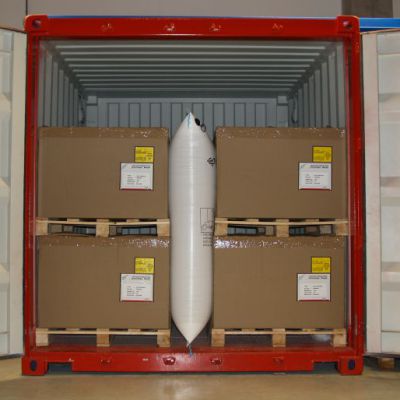
Let’s take a closer look at the various types of dunnage, their uses and their benefits.
What Is Dunnage?
Dunnage is used to secure and load cargo for transport. It can be made from a variety of products and materials including corrugated plastic, foam, aluminum, wood, steel and corrugated paper. There are three primary types of dunnage: kit packs, custom dunnage and multi-material varieties. Dunnage air bags are also commonly used.
Kit packs, also known as component packs, are used to hold all parts of a specific product or application. They tend to improve efficiency by reducing the number of containers needed to hold individual parts. Custom dunnage solutions are developed to meet a customer’s specific needs, and multi-material dunnage is constructed using various types of shipping materials, including cardboard and Styrofoam.
At Air Sea Containers, we offer dunnage air bags that are durable, affordable and well suited to a variety of applications.
Benefits of Dunnage
Dunnage is used to prevent damage to goods while they are being loaded, transported and unloaded. It keeps items from moving around while in transit, regardless of whether they are sent by rail, road or sea. Dunnage air bags offer exceptional value and are more affordable than custom products. They can withstand a maximum of three pounds per square inch of pressure and come equipped with a built-in inflation system. They’re also completely recyclable, making them an environmentally friendly alternative to other options and void fillers.
In general, dunnage also protects goods and packaging from contamination and moisture. By protecting cargo from damage, dunnage helps improve customer relationships and allows for easier loading of fragile cargo. Many types of dunnage, including dunnage bags, are reusable and recyclable, making them sustainable and environmentally friendly. Dunnage braces a cargo load, secures items in place, absorbs vibration and eliminates any voids in shipping containers and vehicles.
Shipping Wood Dunnage
Uses for Dunnage
Dunnage is used in several different ways. On cargo ships, floor dunnage is used to protect moisture-sensitive shipments from the sweat that forms on ship floors. It works by holding the cargo above the deck, allowing the moisture to flow underneath it without causing any damage. Double layers or crisscrossed dunnage is used to protect especially delicate cargo.
Dunnage is also commonly used in shipping containers. These containers are designed to be moisture resistant, so they do not have drainage holes to release water. This means any sweat that forms inside the containers has no way of draining, so it is important to use floor and side dunnage to protect the cargo. Top dunnage is also used to contain the condensation that forms in the tops of shipping containers. For this purpose, paper and other absorbent materials are usually adhered to container ceilings. Plastic tarps may also be suspended below the container’s ceiling to catch evaporated moisture and prevent it from dripping onto the cargo below.
Packaging Dunnage
A Packaging Essential
Dunnage is a small but vital aspect of packaging. It comes in many different forms and can be used to protect virtually all types of cargo during loading, transportation and unloading. It can be made from several different materials and serves various purposes in the logistics industry. From filling voids and preventing shipments from moving around while in transit to protecting sensitive cargo from moisture and securing loads in place, dunnage is extremely useful when shipping cargo by sea, rail and roadway.
At Air Sea Containers, we understand how important dunnage bags to ensure a product’s safety during transport. We are also able to produce bags in custom sizes using either kraft paper or woven polypropylene. These bags are extremely affordable and offer exceptional value for anyone who is involved in the logistics industry. To learn more about our dunnage options, browse our website or contact us today to request additional information.
Related posts: